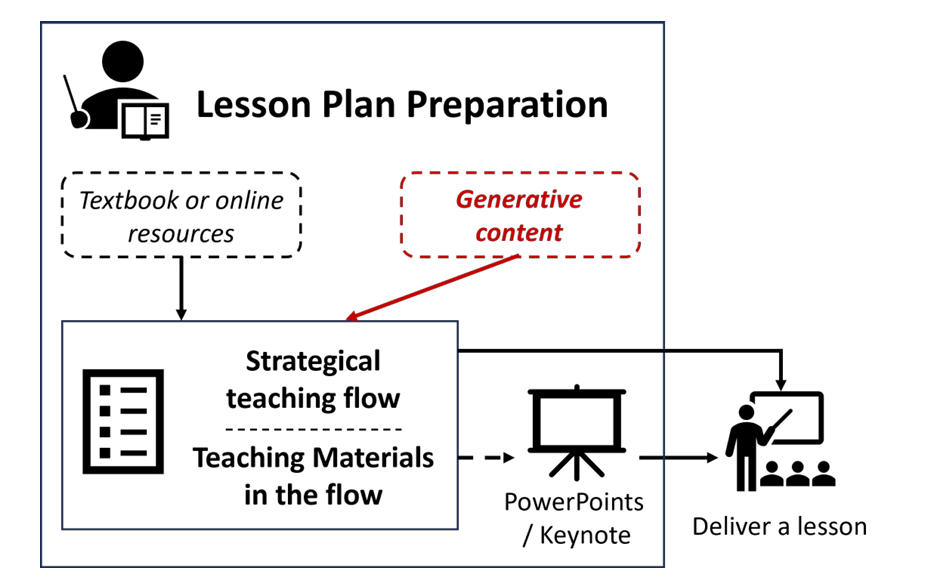
LessonPlanner system interface

LessonPlanner: Assisting Novice Teachers to Prepare Pedagogy-Driven Lesson Plans with Large Language Models (UIST 2024)

LessonPlanner embeds Gagné’s Nine Events of Instruction into an LLM-driven lesson planning interface, guiding novice teachers to interactively construct pedagogically sound lesson plans.
Haoxiang Fan, Guanzheng Chen, Xingbo Wang, Zhenhui Peng
LitLinker system interface

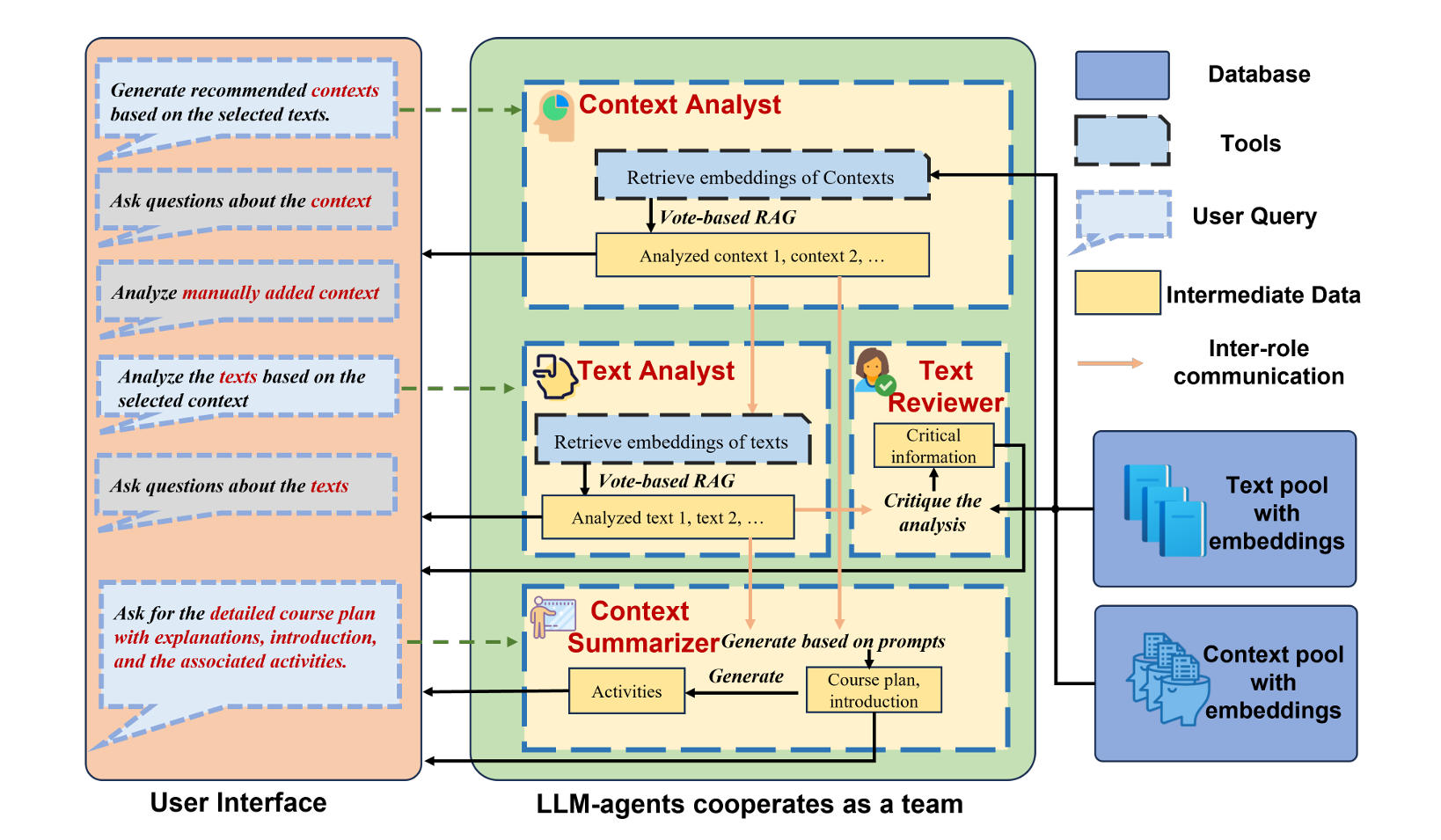
LitLinker: Supporting the Ideation of Interdisciplinary Contexts with Large Language Models for Teaching Literature in Elementary Schools (CHI 2025)

LitLinker is an LLM-powered interactive system that helps elementary school literature teachers ideate interdisciplinary contexts by linking reading materials to subjects such as science and art.

Haoxiang Fan, Changshuang Zhou, Hao Yu, Xueyang Wu, Jiangyu Gu, Zhenhui Peng
AskArt system interface for elementary art education

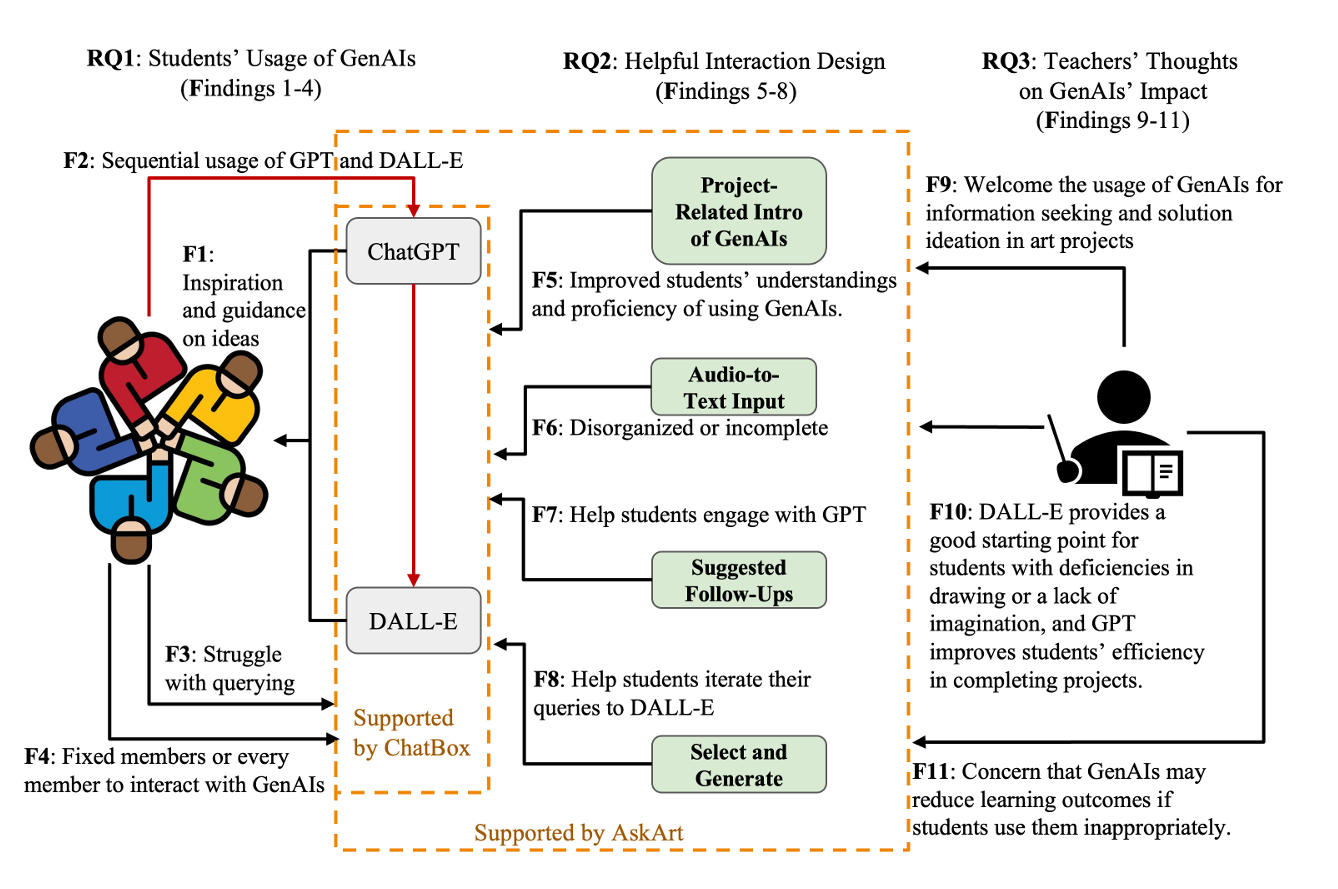
Exploring the Usage of Generative AI for Group Project-Based Offline Art Courses in Elementary Schools (CSCW 2025)

The study reveals that GenAI (deployed as AskArt) benefits students by providing background information, creative inspirations, and personalized guidance, while also identifying challenges such as difficulty in query formulation, varied student collaboration strategies, and teacher concerns about misuse.

Zhiqing Wang, Haoxiang Fan, Shiwei Wu, Qiaoyi Chen, Yongqi Liang, Zhenhui Peng
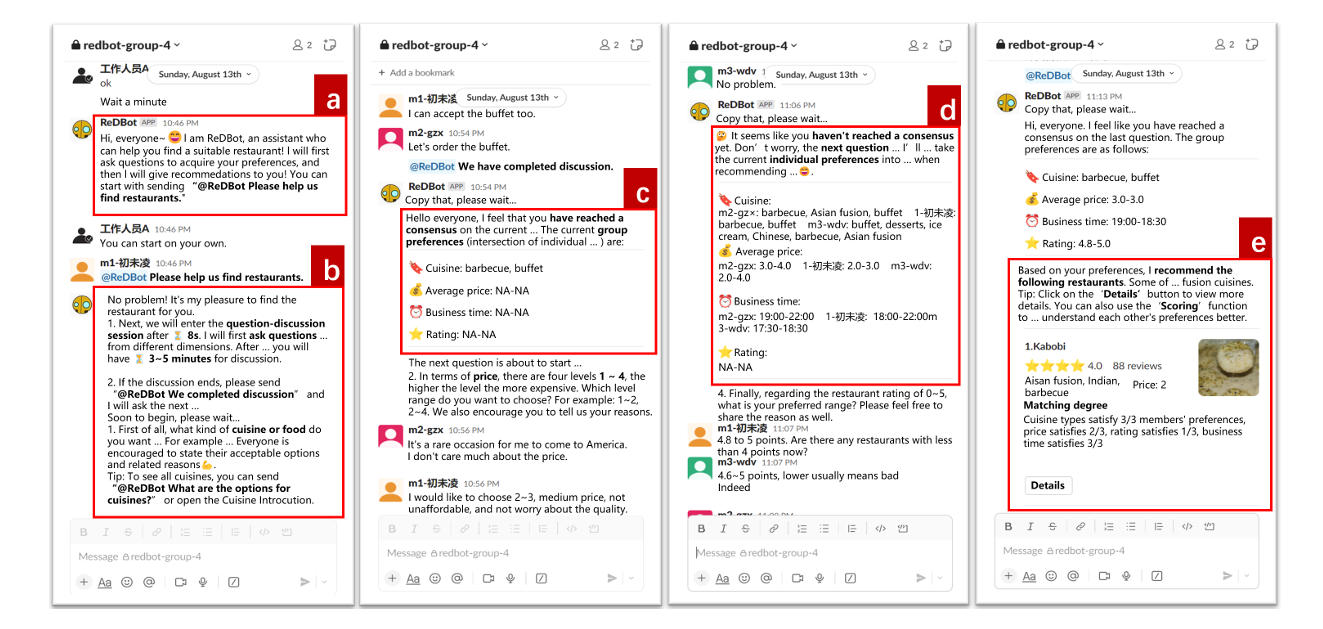
ReDBot conversational recommendation system

ReDBot: Exploring Conversational Recommendation for Decision-Making Support in Group Chats (ChineseCHI 2023)

ReDBot is an LLM-powered conversational recommendation bot for group chats that proactively asks questions to identify group preferences and recommends alternatives accordingly to facilitate consensus in online group decision-making tasks.

Qiushi Han, Haitong Chen, Haoxiang Fan, Zhenhui Peng
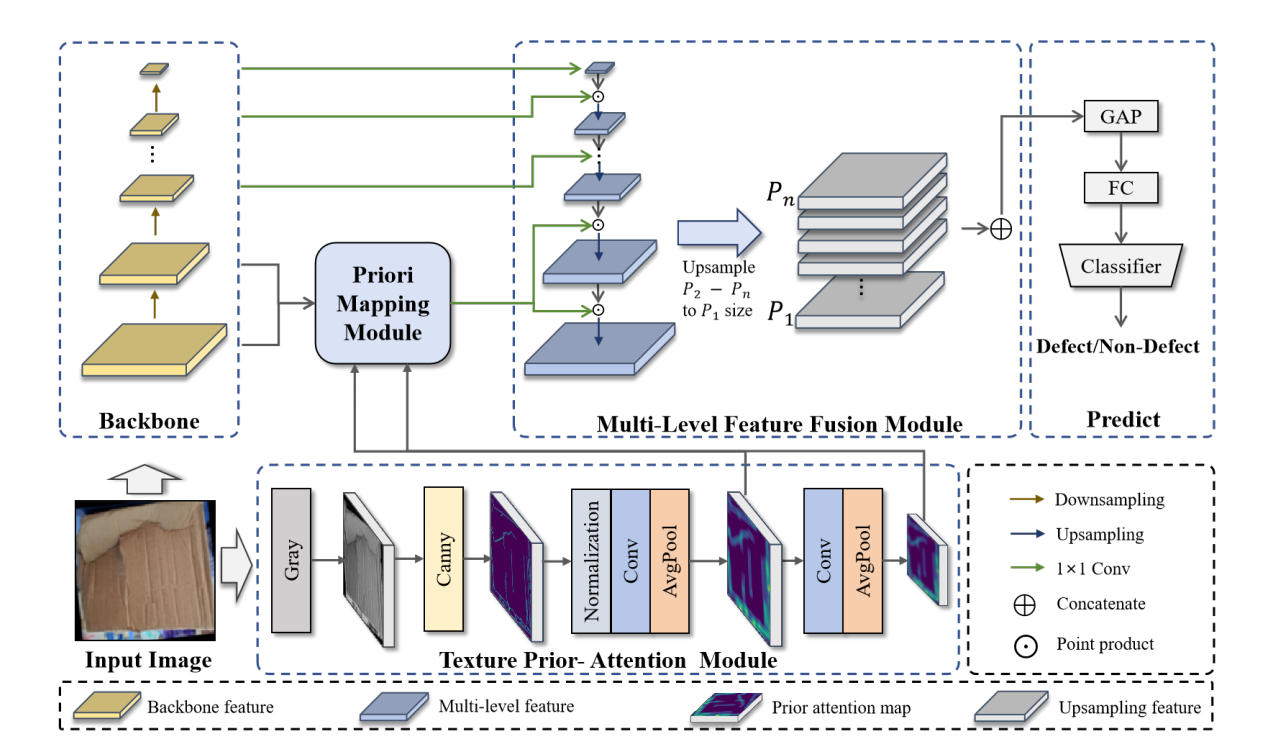
TPMN defect detection network architecture

TPMN: Texture Prior-Aware Multi-Level Feature Fusion Network for Corrugated Cardboard Parcels Defect Detection (IJACSA)

By extracting low-level texture priors via Canny edge detection and fusing them with multi-scale deep features, TPMN addresses the challenges of non-uniform surface textures and multi-scale defect openings in logistics parcel inspection, achieving strong sensitivity to defective packages on a self-collected cardboard-boxes dataset.

Xing He, Haoxiang Fan, Cuifeng Du, Xingyu Zhu, Yuyu Zhou, Renzhang Chen, Zhefu Li, Guihua Zheng, Yuansheng Zhong, Changjiang Liu, Jiandan Yang, Quanlong Guan (2024)
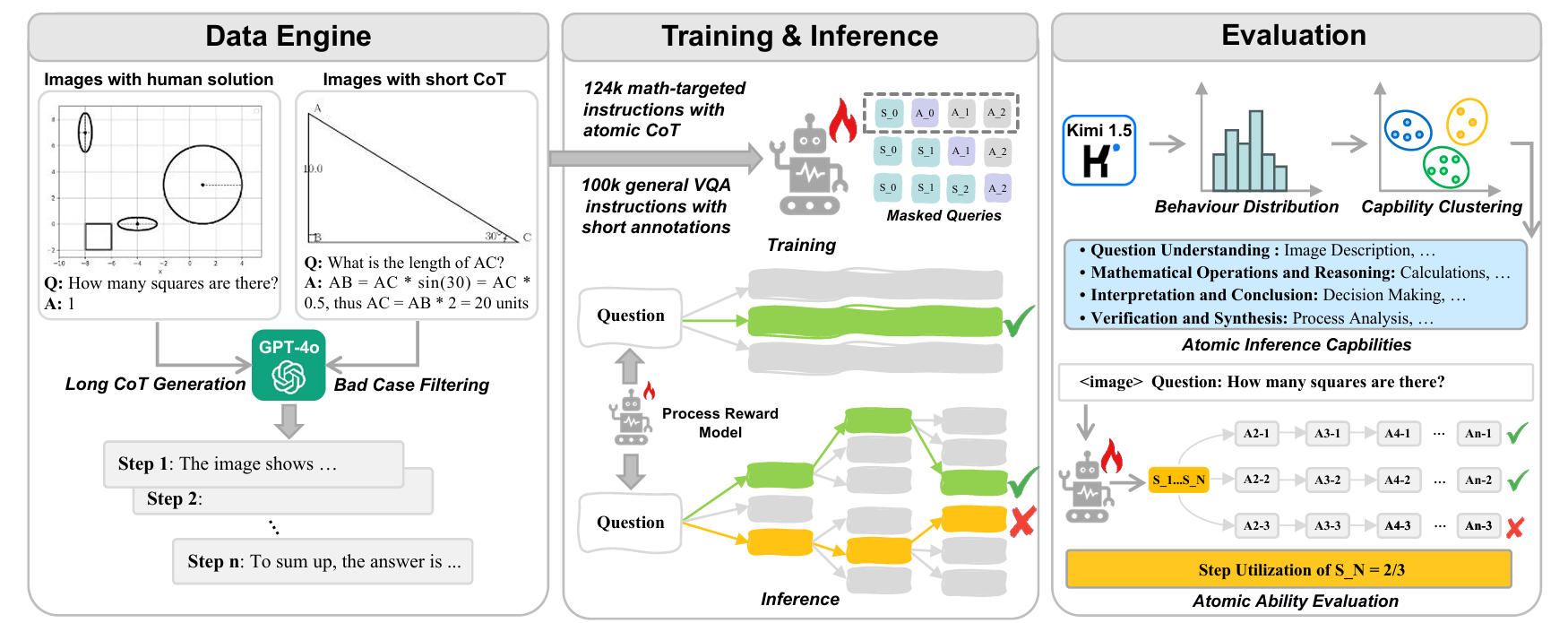
AtomThink framework for multimodal reasoning

Can Atomic Step Decomposition Enhance the Self-structured Reasoning of Multimodal Large Models? (arXiv)

AtomThink introduces four key modules — a data engine, atomic step fine-tuning, policy-guided multi-turn inference, and an atomic capability metric — to bring structured slow-thinking capabilities into visual understanding models, while improving data utilization by 5× and inference efficiency by 85.3% over state-of-the-art structured CoT methods.

Kun Xiang, Zhili Liu, Zihao Jiang, Yunshuang Nie, Kaixin Cai, Yiyang Yin, Runhui Huang, Haoxiang Fan, Hanhui Li, Weiran Huang, Yihan Zeng, Yu-Jie Yuan, Jianhua Han, Lanqing Hong, Hang Xu, Xiaodan Liang (2025)